
How To Write A Good Project Description?

- Try to use this structure as a guide when writing the description:
Who?
What?
Why?
Where?
How?
When?
Use these 6 key questions to build clarity, trust, and emotional connection.
Your project description is how supporters connect to your cause—make it powerful, personal, and transparent.
- WHO – Who are you and who will benefit?
- Introduce yourself or your organization (full name, background, experience).
- Share who the project will help (individuals, a family, a community, animals, etc.).
- Include short personal stories or human details that build trust.
Example:
I am Maria, a volunteer teacher in rural Kenya.
I am raising funds to build a classroom for 80 children who currently learn under a tree, exposed to heat and rain.
- WHAT – What is the project or problem?
- Describe exactly what you’re raising funds for.
- Is it an emergency need? A long-term solution?
- Avoid vague or overly technical language—make it understandable to anyone.
Example:
We’re building a clean water well in the center of the village,
So 300 people don’t have to walk 3 hours a day for safe drinking water.
- WHY – Why is this urgent or important?
Inspire action.
- Explain why your project matters now.
- What are the risks of doing nothing?
- Connect emotionally—why should others care?
Example:
Without a proper shelter before the rainy season, dozens of families in the camp
will remain exposed to flooding, illness, and displacement.
- WHERE – Where is this happening?
Show the local context.
- Specify the location (country, city, village, region).
- Mention any relevant local challenges (climate, conflict, access to resources).
- If possible, share images, maps, or facts about the place.
Example:
The project is based in the Bekaa Valley, Lebanon,
where over 500 Syrian refugee families live with limited access to health care.
- HOW – How will the funds be used?
- Break down your budget (even rough estimates help).
- Mention logistics: how will materials be sourced, who will implement the work?
- Reassure backers you’re ready and accountable.
Example:
$2,000 will cover materials, $1,000 for local labor, and $500 for transport.
We’re working with a trusted local builder who has completed 10 similar projects.
- WHEN – When will this happen?
- Share your timeline: start date, milestones, and project completion.
- Mention any seasonal or time-sensitive issues (weather, school year, harvest, etc.).
- Let people know when they can expect updates or results.
Example:
We aim to start construction in September and finish by early November,
before monsoon rains make the roads impassable.
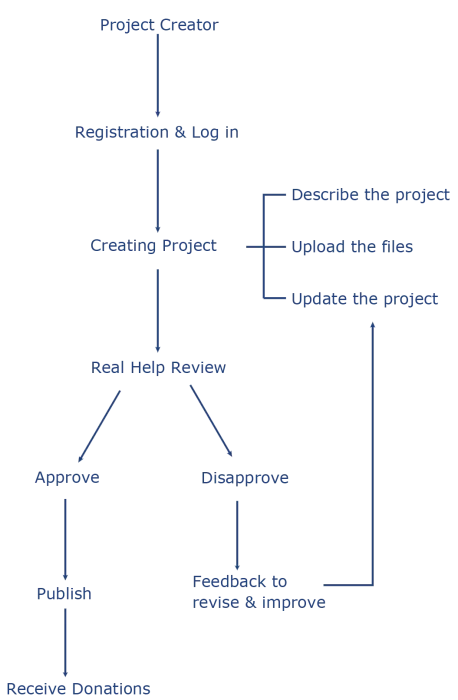
- In addition, the fundraiser of the project should also publicly display the links and relevant information of the project from their social media accounts on our RealHelp platform, so as to enhance donors learn more about the project’s authenticity and progress through other channels.
- Bonus Tips for REAL HELP Projects
- Be Real: Blockchain creates transparency—your story should match that.
- Add Visuals: More photos or short videos massively increase support.
- Share with your friends by Twitter, facebook, etc to draw more people attentions and get more support.
- End with a Call to Action: Tell people exactly what they can do now—donate, share, or follow.
- Example closing line:Your support today can bring clean water to an entire village. Please donate and share this project. Every drop counts.
- Why This Matters on REAL HELP
- REAL HELP is built for transparency, traceability, and real impact.
- When your description is clear, honest, and complete, donors will feel more confident supporting your project.
- Use the blockchain to prove the impact—but use your words to win their hearts.
GIVE HELP & GET HELP
Donors who contribute to projects will be rewarded with HELP tokens.
More donations, more rewards.