
As one of Africa’s oldest wildlife charities and a leading conservation organisation, the Sheldrick Wildlife Trust (SWT) embraces all measures that complement the conservation, preservation and protection of wildlife.
Born from one family’s passion for Kenya and its wilderness, the Sheldrick Wildlife Trust was established 48 years ago.
Working across Kenya, our projects include anti-poaching, safe guarding the natural environment, enhancing community awareness, addressing animal welfare issues, providing veterinary assistance to animals in need, rescuing and hand rearing elephant and rhino orphans, along with other species that can ultimately enjoy a quality of life in wild terms when grown.
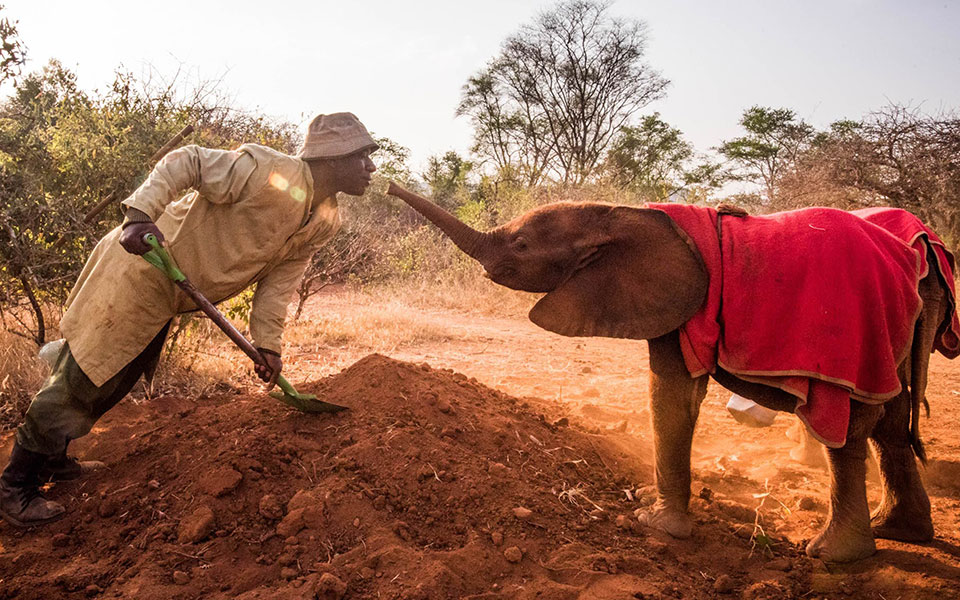
We are best known for our pioneering Orphans’ Project, a first-of-its-kind program to rescue, raise, and rewild orphaned elephants and rhinos. Underpinning this mission, our extensive field projects, which protect wildlife and preserve critical habitats across the Kenya. Backed by decades of field experience, we are a multi-dimensional conservation organisation dedicated to tackling the greatest threats facing Kenya’s natural world, while engaging local communities and mobilising a global supporter base in the process.
Ambition
As the human population expands, pushing wildlife to the very brink of extinction and wild habitats to the edge of destruction, the Sheldrick Trust is determined to reverse the effects of the past and prevent the effects of the present, in the hope for a better future for both wildlife and mankind.
Since its inception the Sheldrick Trust has delivered outstanding results by leading the way in single-species conservation, and in doing so, has evolved into a multi-dimensional conservation body ready to meet the growing challenges faced by Kenya’s threatened wildlife and habitats.
Through close working partnerships with the Kenya Wildlife Service, the custodians of Kenya’s wildlife, the Kenya Forest Service and local communities, the Trust can, and is, taking the lead in securing vast tracks of land for wildlife.
In Kenya, we are tackling challenges ranging from poaching to habitat destruction through our pioneering field projects so that humans and wildlife can find balance and live in harmony for generations to come.
Global Challenges Facing Wildlife
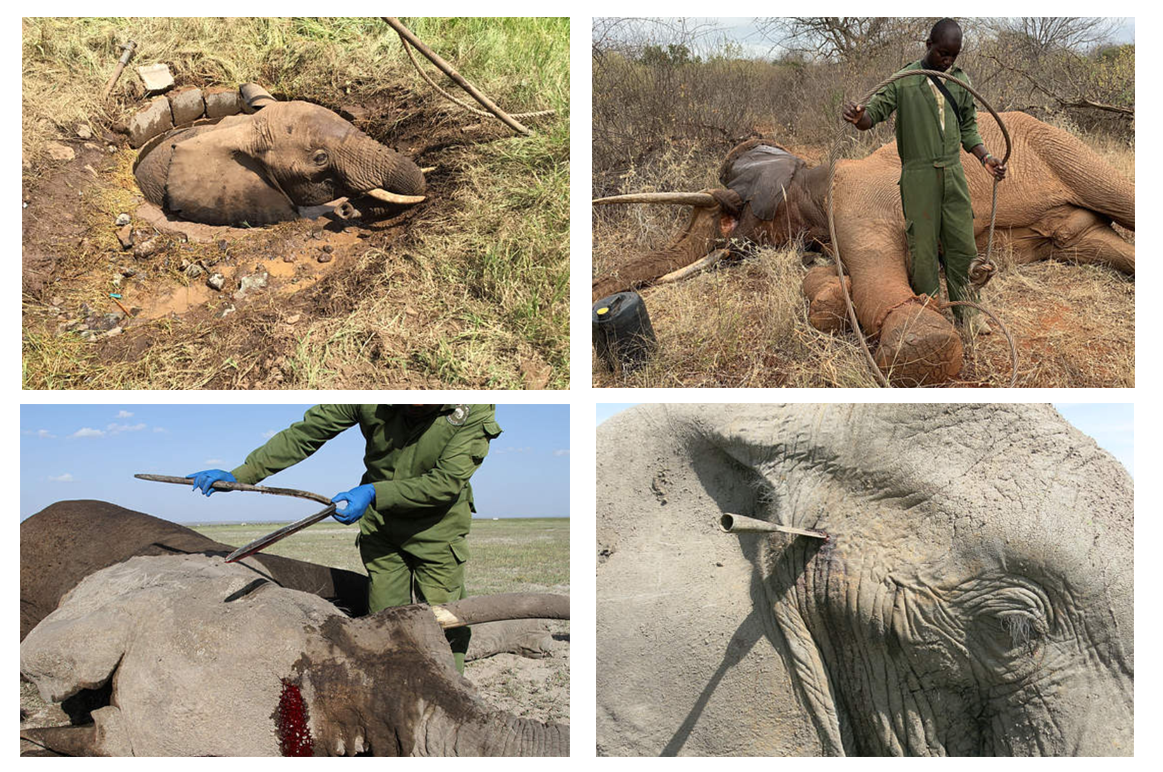 As human populations expand, communities are moving into habitats previously home to wildlife. Whether it’s farms built on traditional elephant migratory routes or increasing numbers of livestock and livestock grazing within wildlife territory, the result is key resources like water and land are becoming more scarce and incidences of crop raiding, livestock predation and conflict have grown. As the population of Kenya is projected to be more than 50% higher by 2030, which will further stress relations between humans and wildlife, human-wildlife conflict is set to become an even bigger issue.
Crop raiding is an issue facing many communities on the borders of national parks. Though many elephants can navigate through the patchwork settlements, some opportunistic elephants find their way onto farms and are capable of flattening entire crops in a matter of hours. Farmers can lose crops, property and even lives – it’s said that some 500 people are killed each year by elephants and wild animals including elephants can killed in retaliation.
The predation of livestock by lions, leopards and hyenas or movement close to community lands as predators follow their prey on migratory routes can also cause retaliatory attacks. The poisoning of bait, shootings and the spearing of animals are some of the cases the SWT/KWS Vet Units have treated.
In the dry season, elephants move between Protected Areas and community land in search of food and water. Hand-dug, steep-sided wells and watering points used for human consumption and livestock can trap young calfs who fall in or get stuck, who may later be abandoned by the herd if efforts to free them are unsuccessful or disturbed.
Projects that address this threat
Species we protect
As well as being the largest land mammal on earth, elephants are a keystone species and play an important role in the environment where they live. However, having roamed the wild for 15 million years, today, this iconic species faces the biggest threats to its survival due to ivory poaching, human-wildlife conflict and habitat destruction.
Today, rhino horn poaching is the main threat facing rhinos as demand has escalated in Asian countries, especially in Vietnam. Despite having no proven medicinal value and made of keratin, rhino horn has long been used in traditional medicines but in recent years, it has been incorrectly touted as a cure for ailments ranging from hangovers to treatment for cancer as well as status symbol.
As well as being the tallest animal on earth, giraffes are a keystone species and play an important role in the environment where they live. However, this iconic species faces the biggest threats to its survival due to habitat loss, human population growth, poaching, disease, war and civil unrest.
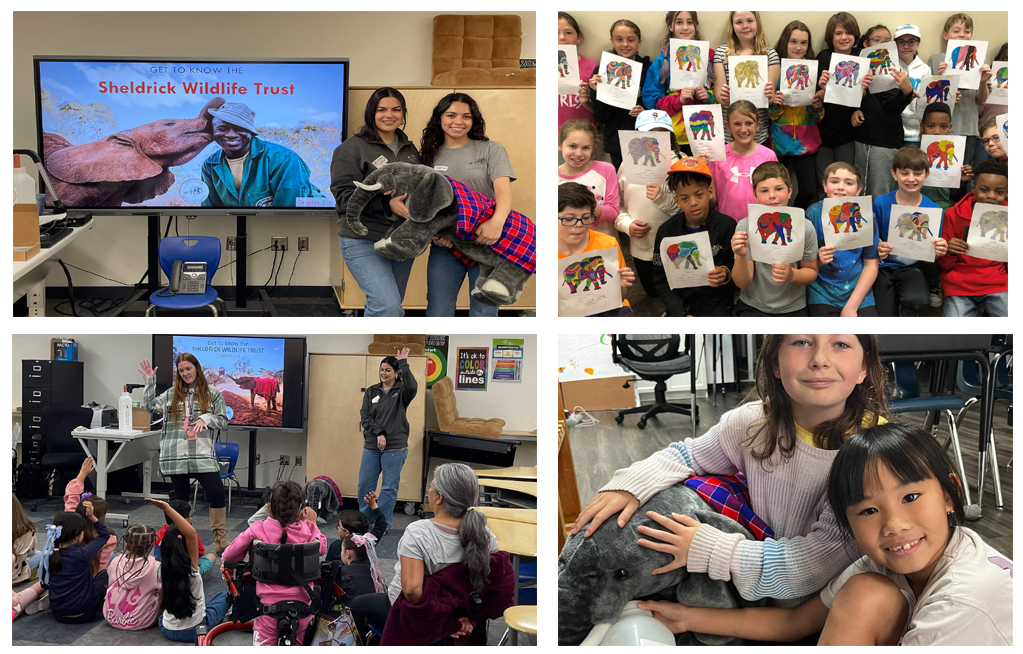
Education Program
Where we work
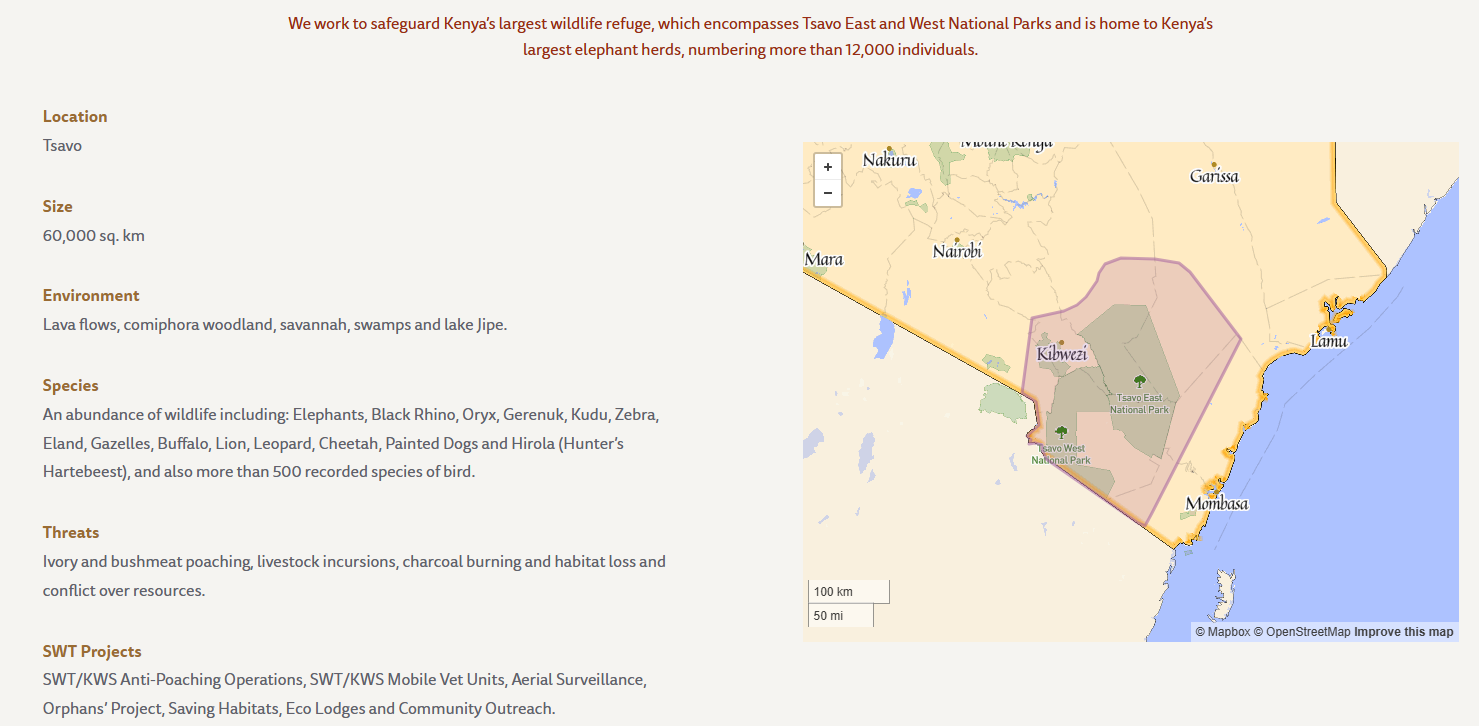
We work to safeguard Kenya’s largest wildlife refuge, which encompasses Tsavo East and West National Parks and is home to Kenya’s largest elephant herds, numbering more than 12,000 individuals.